
Bridge the Professional Gap through Mentorship.
Early-career women often struggle with workplace anxiety due to a lack of guidance and a safe environment for professional growth.

WeTalk provides a tailored mentorship program, connecting users with experienced mentors to transform social anxiety into career-defining connections.
I designed a psychologically-driven platform that empowers early-career women to overcome workplace social anxiety.
“I want to speak up in meetings, but the fear of judgment holds me back.”
Timeline
12 Week Group Project
Lead UX Designer
Specializing in Experience Strategy, Visual Design, Branding, and Interaction Design.
My Role
Persona Development, UX Research & Synthesis, Journey Mapping, User Flow Design, Low to High-Fidelity Wireframing, Interactive Prototyping, and Usability Testing.
Deliverables
Background
During my senior year at the University of Waterloo, I collaborated with Sun Life Financial for our Capstone project. The mission was to innovate a digital wellness solution for the next generation of Canadian professionals.
As a cohort of soon-to-be new grads ourselves, my team and I felt a deep, personal resonance with the invisible hurdles of entering the workforce. We identified that Social Anxiety Disorder (SAD) acts as a significant "growth ceiling" for early-career women. We decided to bridge Sun Life’s focus on mental health with a targeted intervention for workplace social confidence.

"Social Anxiety Disorder is not merely shyness; it acts as a 'growth ceiling' in professional environments. Research indicates that individuals with SAD are significantly less likely to attain leadership positions and often experience a 10% to 15% decrease in lifetime earnings due to avoided opportunities."
Stein, M. B., & Kean, Y. M. (2000). Disability and quality of life in social phobia: Epidemiologic findings. American Journal of Psychiatry.
01 | Mixed-Methods Research
I used a mixed-methods approach to bridge the gap between what users do and why they do it.
Quantitative
I surveyed over 100 professional women to determine if the "lack of safe space" was a real pain point or just a niche opinion. The data was undeniable: 72% of respondents found mainstream platforms too judgmental for discussing sensitive career setbacks. This quantitative foundation proved we were solving a high-demand problem, not just a personal hypothesis.
Qualitative
Numbers show the "what," but interviews reveal the "why." By conducting deep-dive sessions with 8 participants, I uncovered the 40% Comfort Gap—a specific emotional threshold where women feel significantly more secure sharing vulnerabilities in dedicated environments. These stories gave the data a soul and directly shaped our core safety features in the design stage.
02 | Research Synthesis: Key Data Insights
I categorized the 20 data points from my primary research into four strategic dimensions to inform the design of WeTalk.
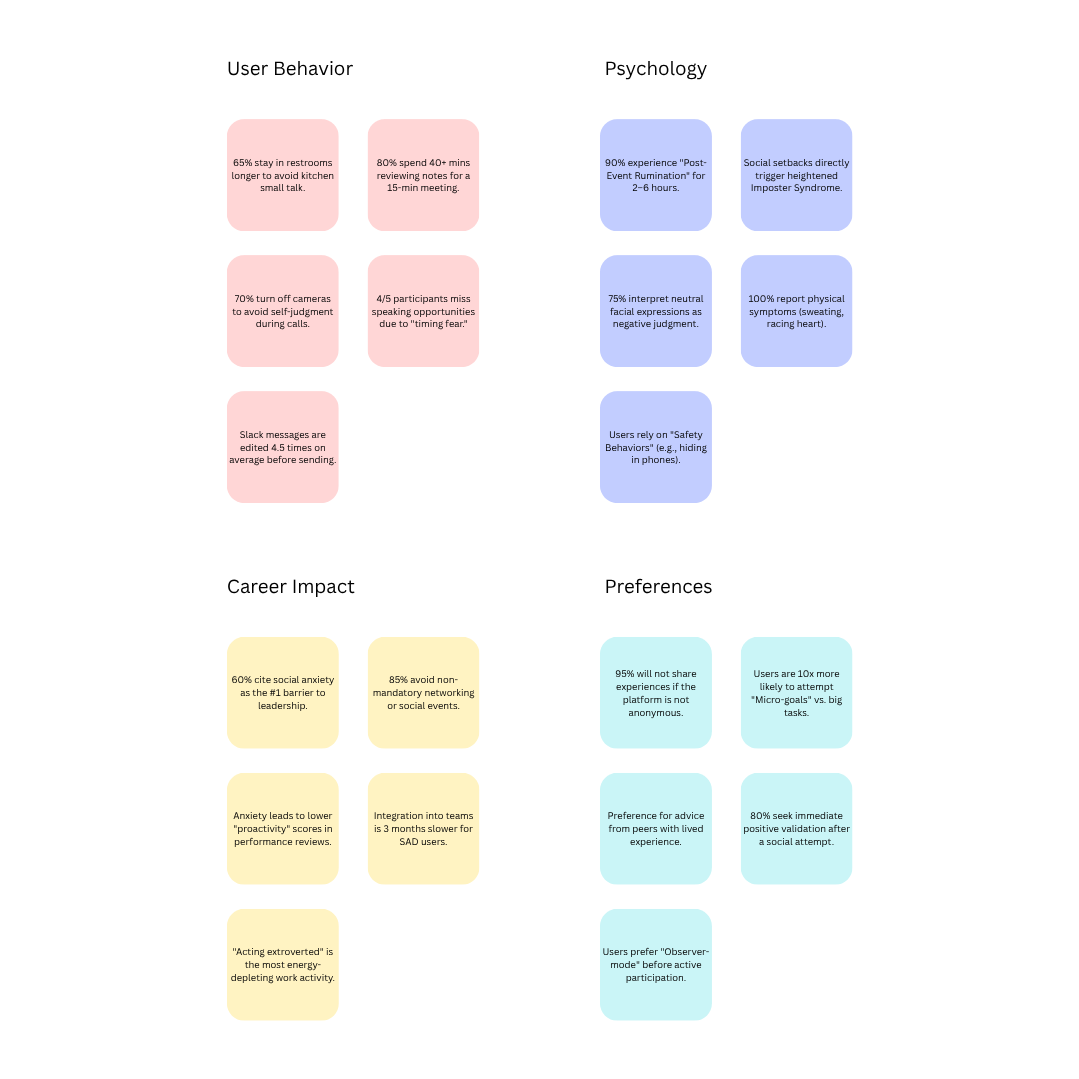
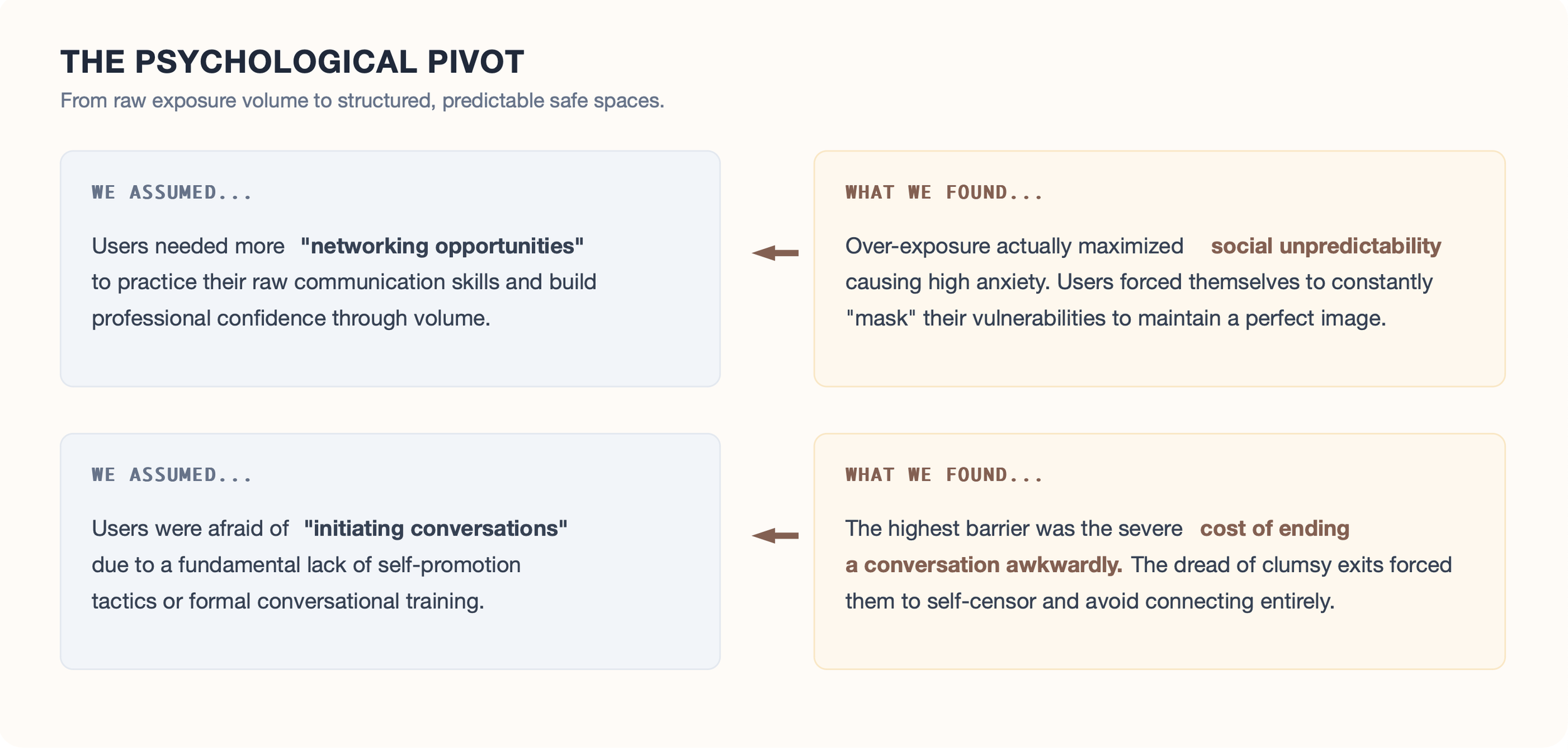
Before the research, We assumed users needed more "networking opportunities" to practice social skills. But that’s not the case real world facing.
Our research revealed that over-exposure to open networking actually increased anxiety. Users weren't afraid of "talking"; they were afraid of "social unpredictability" and the "cost of ending a conversation awkwardly."
03| Persona & Journey Map
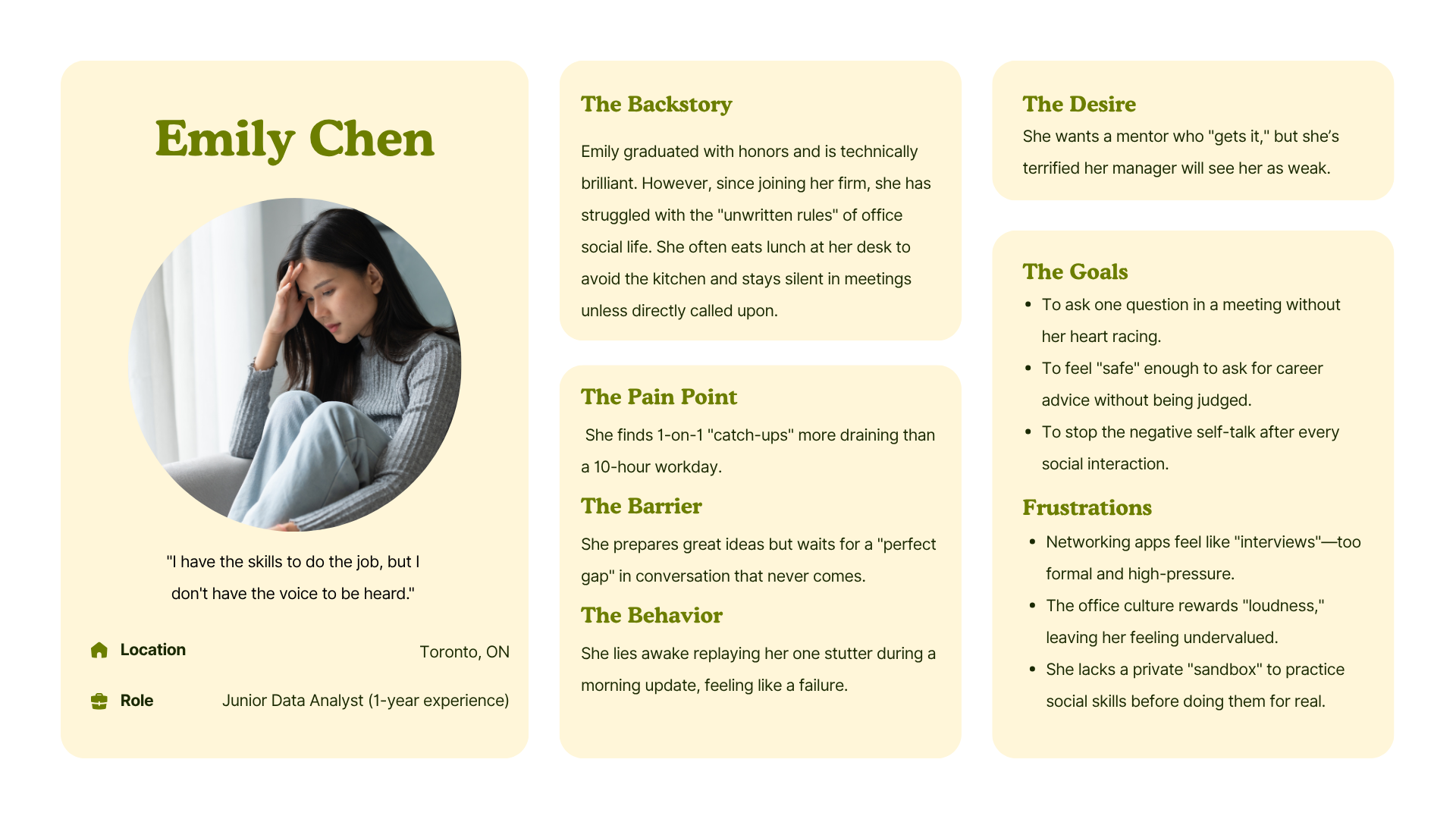
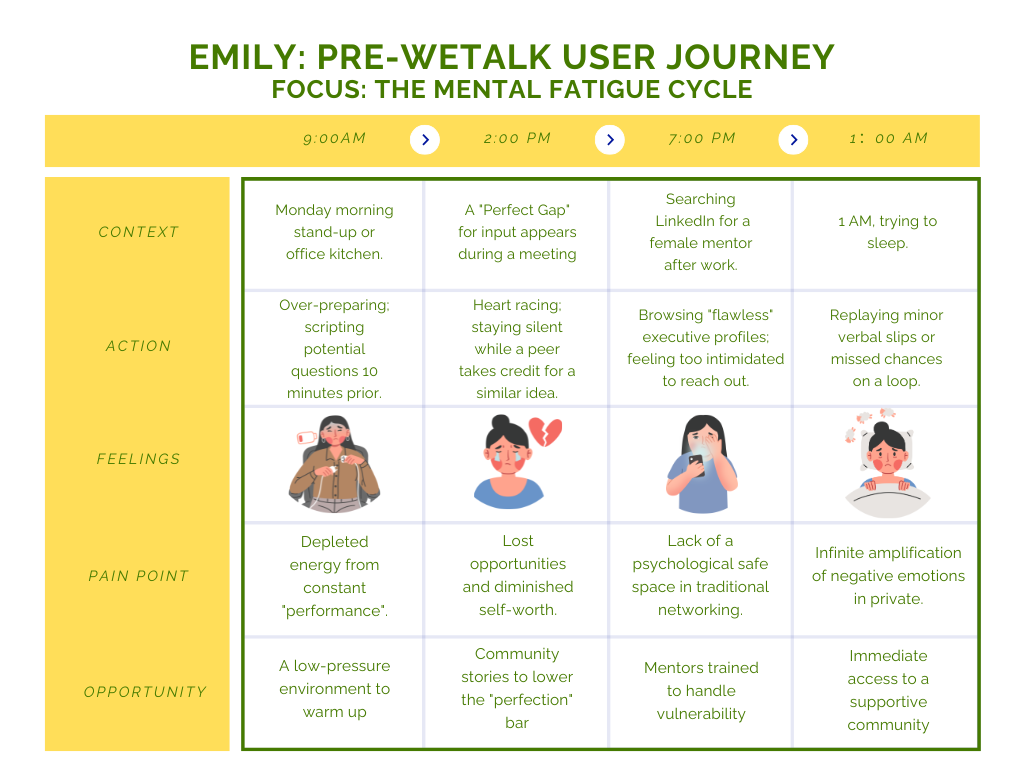
To bridge the gap between user anxiety and professional growth, we translated our core research insights into a living archetype. This persona serves as our North Star, ensuring every subsequent feature specifically addresses the 'invisible barriers' women face in the workplace.
Why Women?
Secondary research from Harvard Business Review suggests that in mixed-gender professional settings, women are more likely to adopt "defensive communication" to avoid stereotypes. Our goal was to eliminate this invisible cognitive load.
Data indicates that women’s engagement depth in gender-specific spaces is 30%-50% higher than on open platforms like LinkedIn, where "self-censorship" is prevalent due to unsolicited interactions.
In our synthesis of 100+ target users, we observed a 40% higher willingness to share sensitive career setbacks within gender-specific "safe zones."

From Emotional Reflection to Functional Solution
Through Emily's journey, we identified that the core barrier isn't a lack of "social skills," but a lack of professional safety. To bridge this, we defined our design direction: Creating a controlled, high-trust environment where vulnerability is an asset, not a liability.
The Trade-offs
To achieve our mission of creating a high-trust 'psychological sandbox' for Emily, we ideated three distinct solution paths. However, innovation requires focus. To determine which direction would yield the most profound impact, we conducted a second round of deep-dive interviews with our target users to stress-test these concepts through the lens of their real-world trade-offs
Discussion Board
A social forum or group-based platform (similar to a niche Reddit or Slack) where users can post questions, share experiences, and engage in open discussions with peers.
To leverage "crowdsourced" wisdom and provide a sense of belonging through scale.
During interviews, users expressed that anonymity breeds unpredictability. In an open forum, Emily risks receiving "unsolicited noise" or generic advice, which fails to provide the precision and safety required to resolve her specific, high-stakes workplace anxieties.
"I don't want to explain my situation to 1,000 strangers and wait for likes."

Learning Portal
A curated library of self-paced courses, "how-to" guides, and social-skill toolkits (similar to LinkedIn Learning) focusing on workplace etiquette and communication.
To empower users through "hard skills" and proven frameworks.
Our research confirmed that Emily is already technically brilliant. Her barrier isn't "not knowing how" to talk; it's the paralyzing fear of execution. Pure knowledge intake acts as a "band-aid" that fails to provide the experiential validation and human encouragement needed to break the cycle of self-doubt.
"I've read the books, but I still freeze when my boss looks at me."

Mentorship Program
A structured 1-on-1 connection system that matches early-career women with "Near-Peer Mentors" (those 2-3 years ahead) for targeted, high-trust guidance.
To create a "Psychological Sandbox" where vulnerability is met with lived experience.
Interviews showed that for Emily, empathy is the only antidote to anxiety. A 1-on-1 mentor provides the "I've been there" validation that a forum or a textbook cannot. It offers specific, actionable guidance that Emily can immediately apply to her next meeting, turning a daunting social challenge into a manageable micro-step.
"I just need one person who has survived this to tell me I'm doing okay."
Through interviews, we ultimately selected the mentorship program as our core function. Surpriseingly, our second round of deep-dive interviews revealed that users’ true needs differed significantly from our initial assumptions. These counter-intuitive insights guided us for the next step and ultimately became our product’s unique competitive edge.
Initial Assumption
Users seek out “top-tier companies” and tend to look for female executives at the peak of their careers to serve as mentors
What We Found
Young professionals are more keen to connect with “near-peer mentors”—those with only 2–3 years more experience than they have.
For Emily, the path to success taken by top-tier professionals felt too distant, which only added to her mental burden. In contrast, her mentor—who had recently emerged from the early stages of their career—still vividly remembered the anxiety of starting out and was able to offer practical advice that resonated deeply and delivered immediate results.
Initial Assumption
Communication barriers stem from not knowing what to say, so it is necessary to provide a large number of pre-written chat templates.
What We Found
The core of social resistance lies not in the content, but in the “uncertainty of feedback.”
Emily’s real fear was, “Will I be bothering others?” By providing contextual cues (such as the mentor’s availability and topic preferences), we eliminated this “social uncertainty.” This transparency is more effective than any template at lowering the psychological barrier to communication.
Initial Assumption
Large-scale, highly active open communities are the best way to build professional networks.
What We Found
When anxious users need to grow, they tend to prefer a “time-limited and private” space—a sort of “black box.”
The purpose of open communities is “showcasing,” but what anxious Emily needs is “practice.” This time-limited, private space provides her with a safety net for “low-cost mistakes” before she enters the real workplace. WeTalk’s core objective isn’t to build mentoring relationships that last for years, but to break Emily out of her “stagnation” when she faces specific setbacks. We use a 7-day time limit to ensure mentors provide the highest quality, most focused, and immediate feedback. If the two truly click, they can naturally transition to external long-term social networks (such as LinkedIn).
Emily’s Journey With WeTalk
-
![]()
The journey begins at Emily’s desk after another painful meeting. Her inner critic is screaming: "Stutter," "Mistake," "Mistake." While technicians might see a quiet analyst, this is the reality of the Post-Interaction Rumination Loop (Problem #3). She’s paralyzed by the constant replay of a five-minute conversation, feeling completely overwhelmed by her social anxiety and isolated in her professional environment.
-
![]()
Searching for help, Emily is reluctant to go to HR, fearing it might mark her as "weak." Her primary desire is for help Without Exposure (Problem #4). As she reviews employee benefits, she searches for solutions that can offer her a sense of Identity Safety. She needs a place to learn and grow, but her fear of professional judgment creates a massive barrier to engagement.
-
![]()
This is the moment she discovers WeTalk. The platform's commitment to anonymity—exemplified by an initial non-traditional icon—immediately lowers her "Psychological Friction." For the first time, she feels the platform isn't about formal networking but about personalized growth. She searches for, finds, and downloads the app, her first step into a safe digital sandbox.
-
![]()
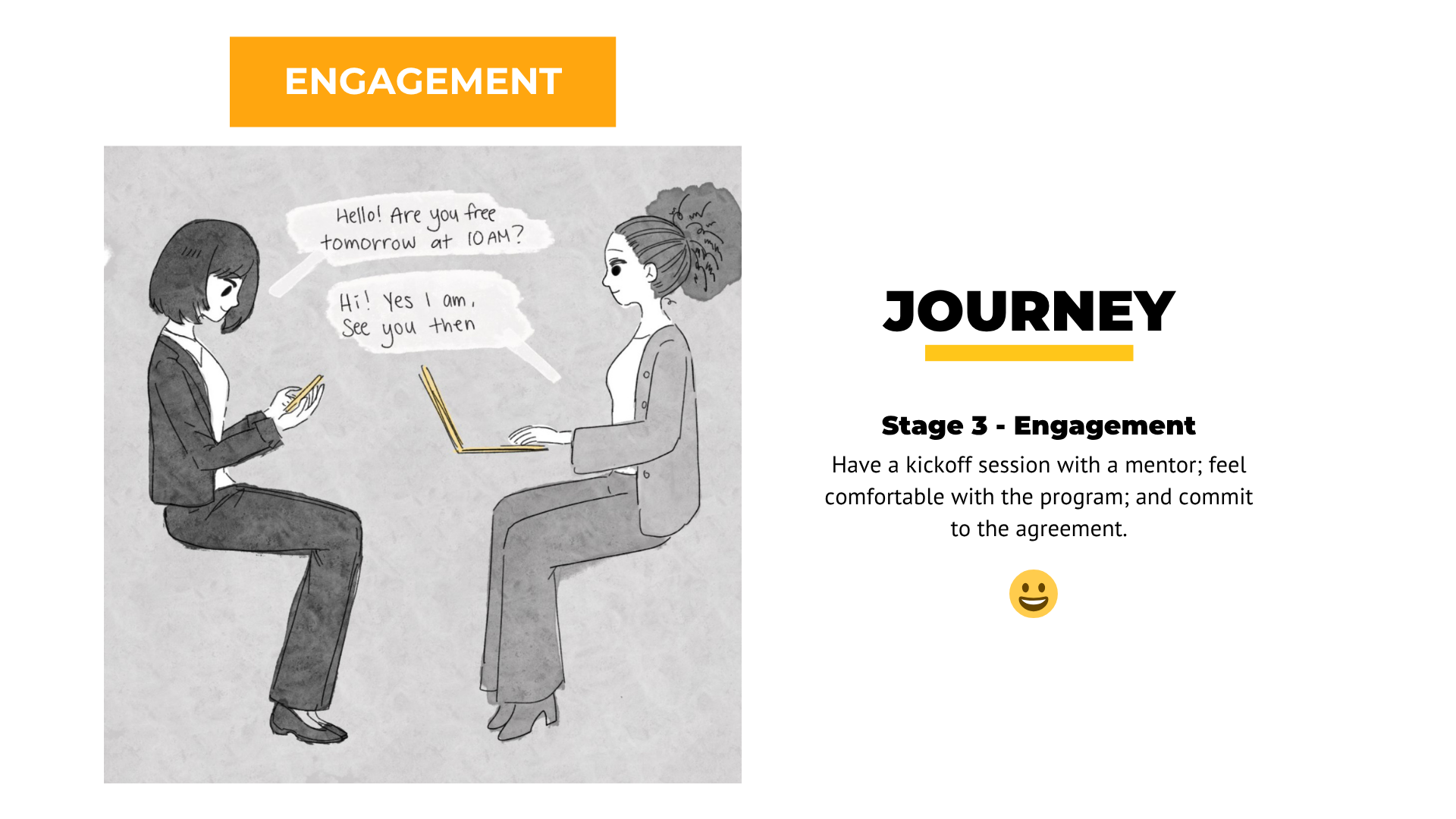
Inside the platform, Emily utilizes a Low-Stakes Scripted Icebreaker. Instead of facing the overwhelming dread of starting a conversation with a senior figure, she uses a customizable template to say: "Hello! Are you free tomorrow at 10 AM?" The mentor’s immediate, relatable response—"Hi! Yes I am. See you then."—begins to build trust and lowers the energy drain of casual interaction (Problem #1).
-
![]()
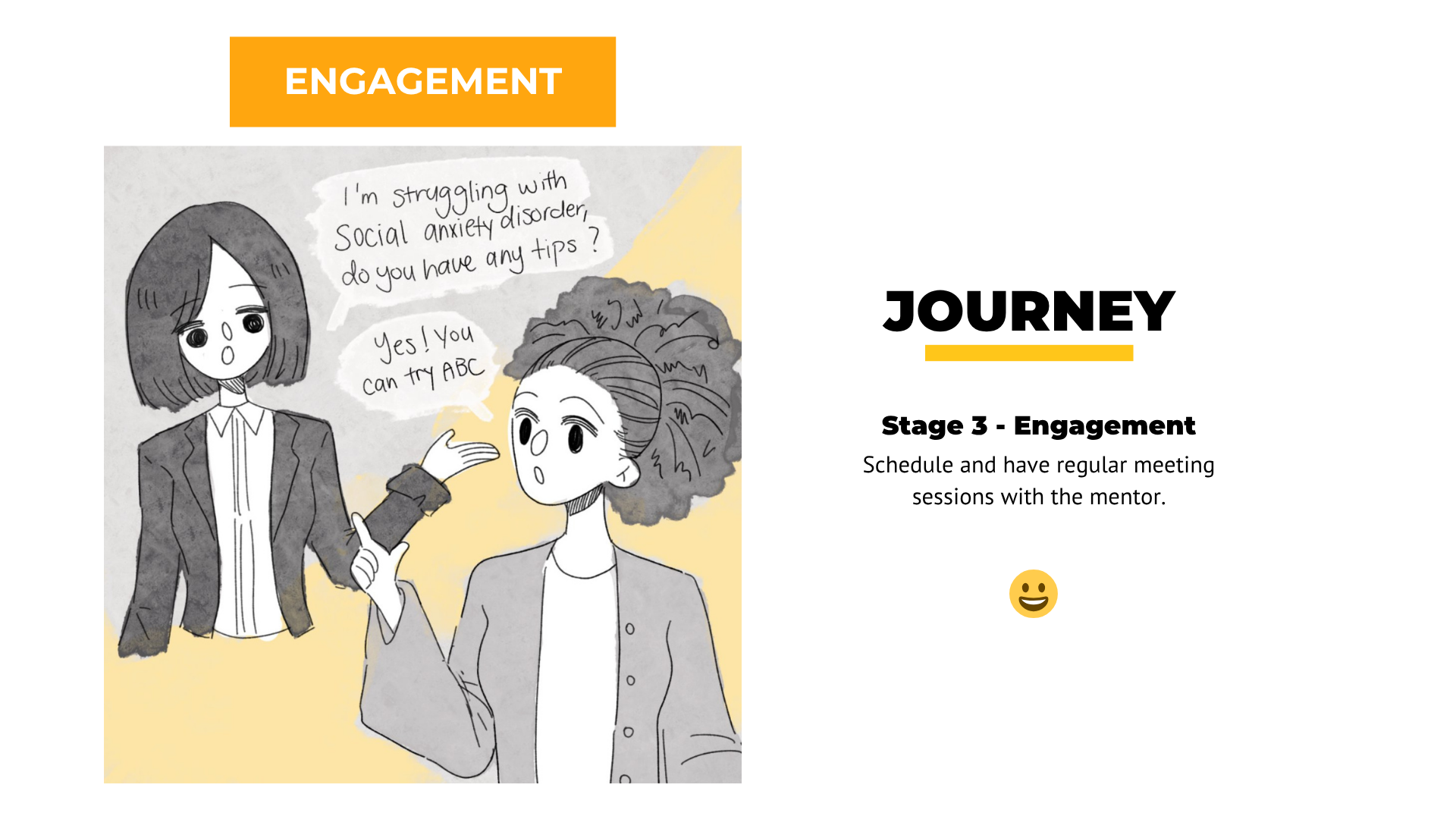
During their first session, Emily opens up about her core struggles with Symmetric lived experience (Problem #4). The mentor, who has previously navigated similar anxiety, provides a direct transfer of soft skills and "Social Navigation" knowledge (Problem #2). By focusing on shared experience rather than professional judgment, this Relatable Mentorship Solution gives Emily her first concrete roadmap to build visibility.
-
![]()
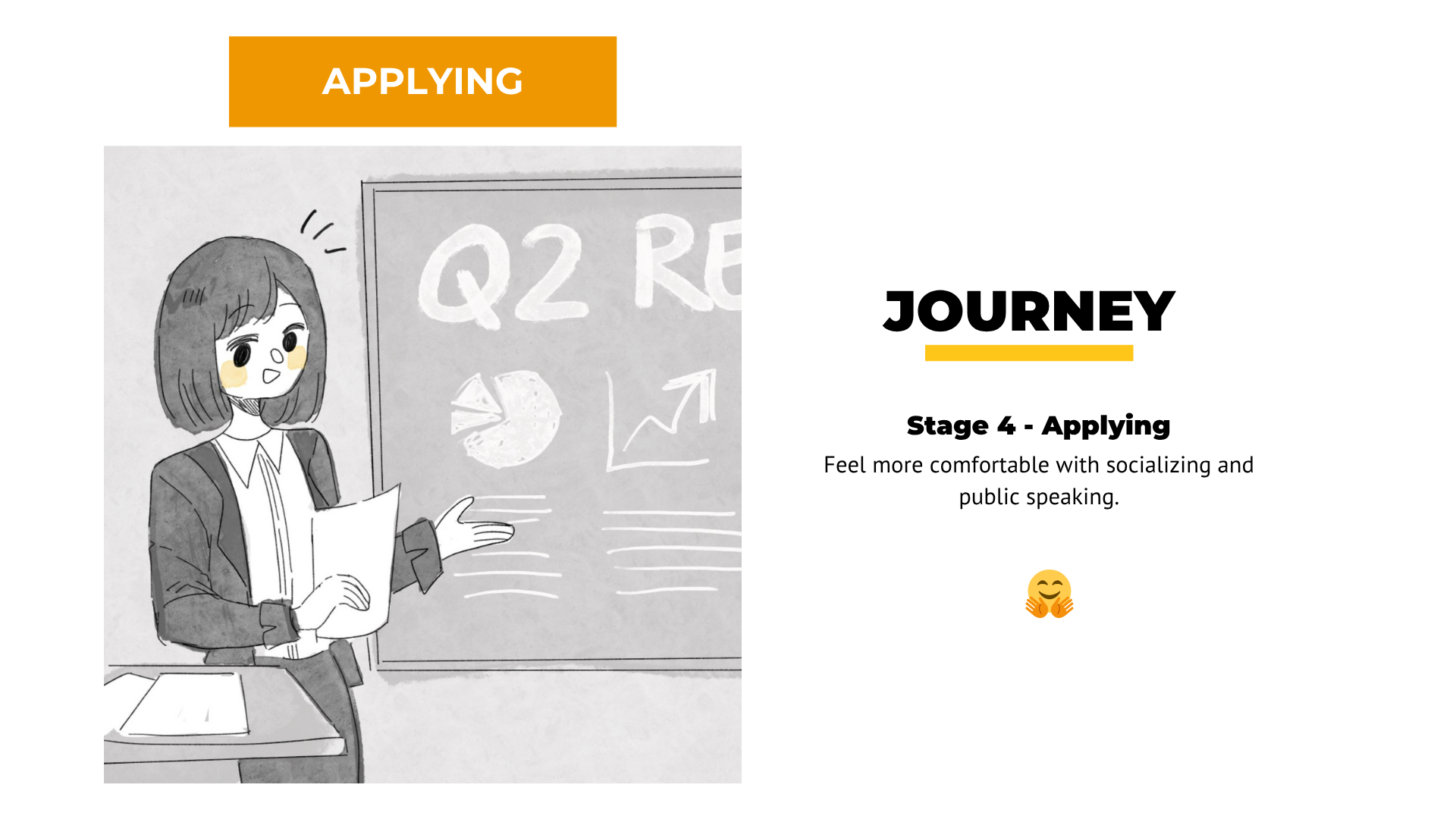
The culmination of her journey is the real-world application of her practice. Having received coached, scripted feedback from her mentor, Emily leads her Q2 RE presentation. While she may not be the loudest person in the room, her presence is visible and her professional potential is recognized. This is the Controlled Exposure she needed to reclaim her professional narrative, moving from silence to a new sense of confidence.
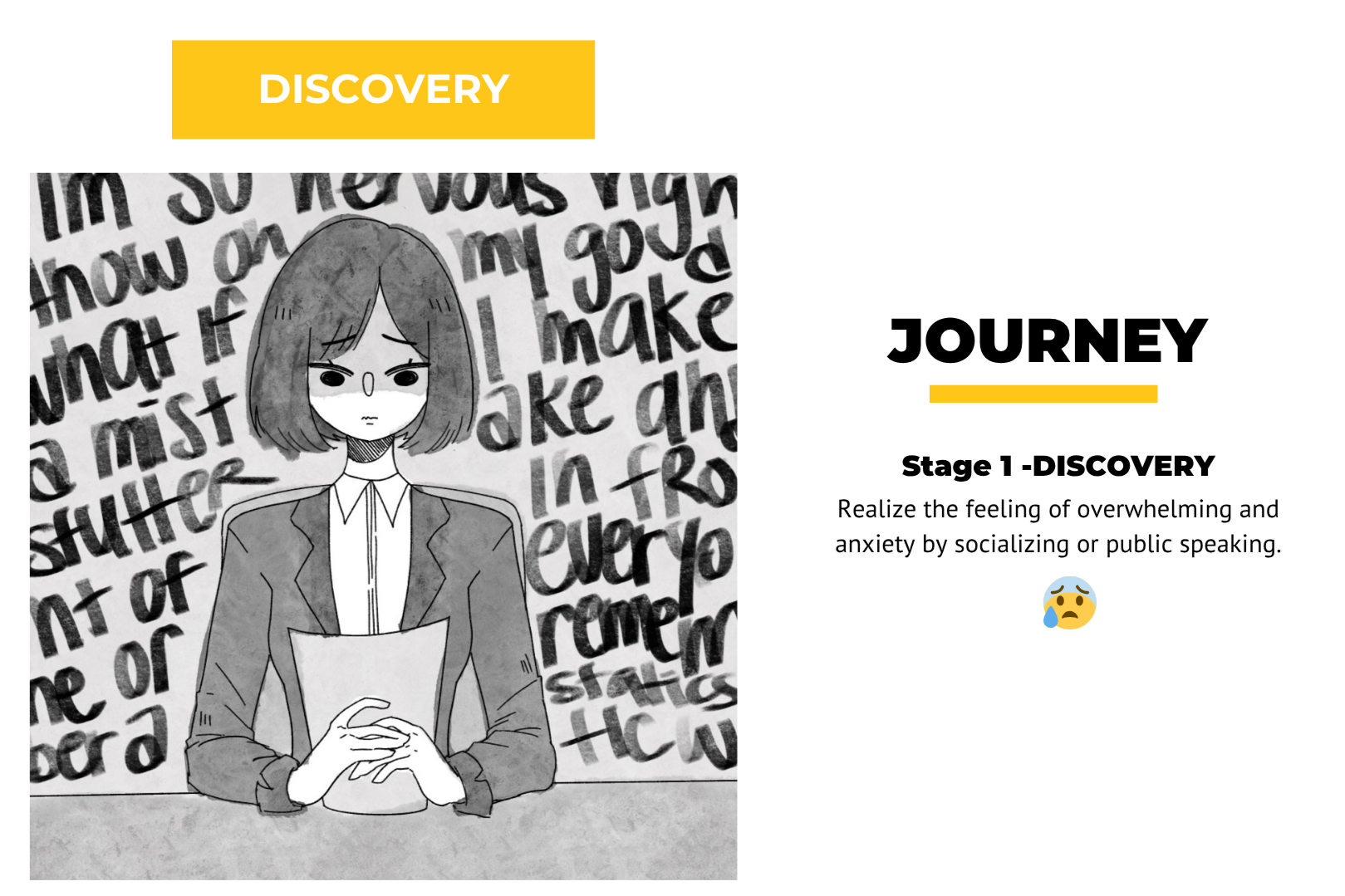
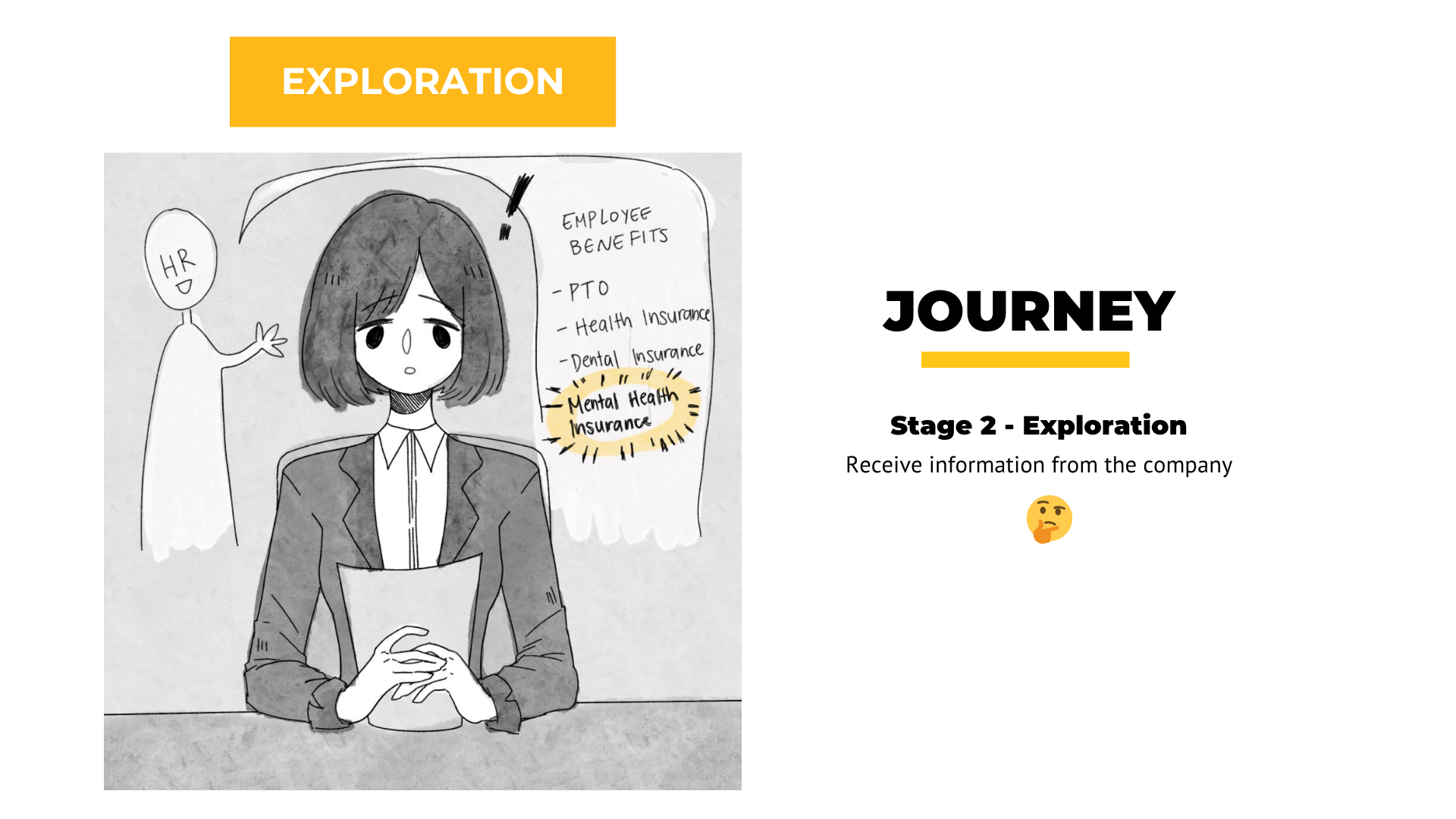
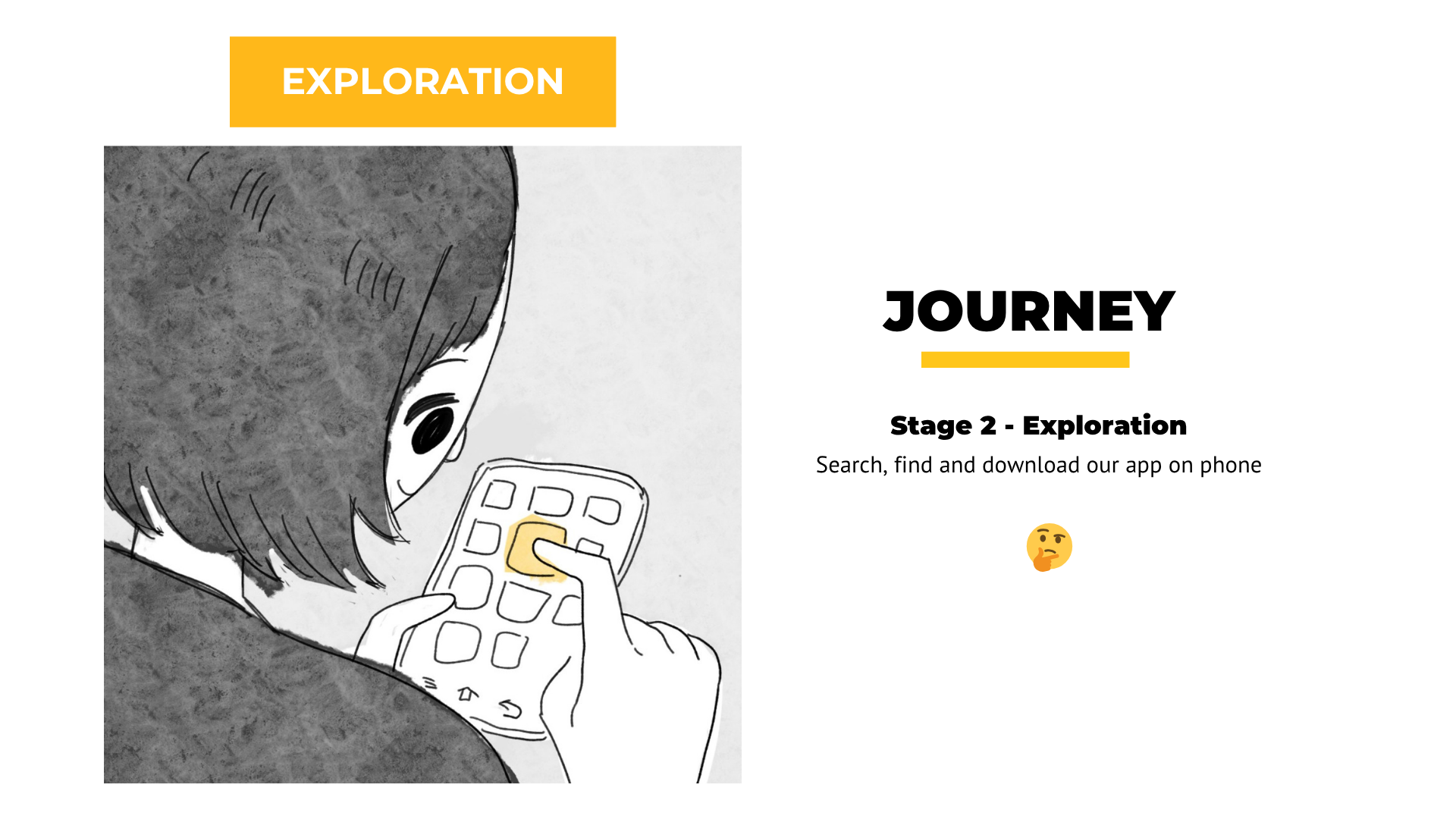
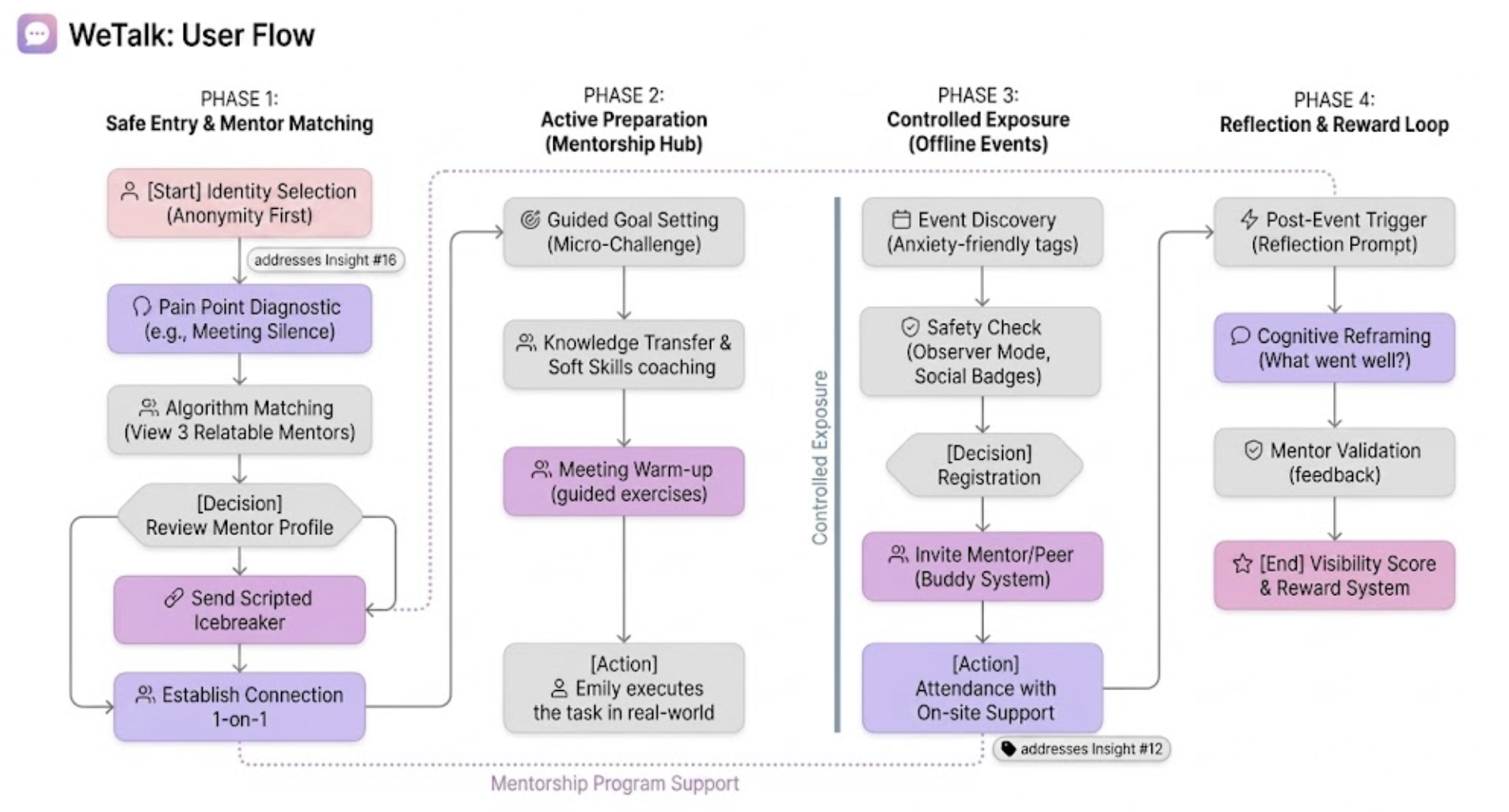
Based on my strategic requirements, I developed this integrated User Flow to illustrate how WeTalk fosters social confidence through a tiered exposure approach. Notice how the Mentorship Program (Core) acts as a consistent 'safety net,' providing human empathy and professional guidance before Emily ever attempts a real-world interaction
Sketch & Wireframe
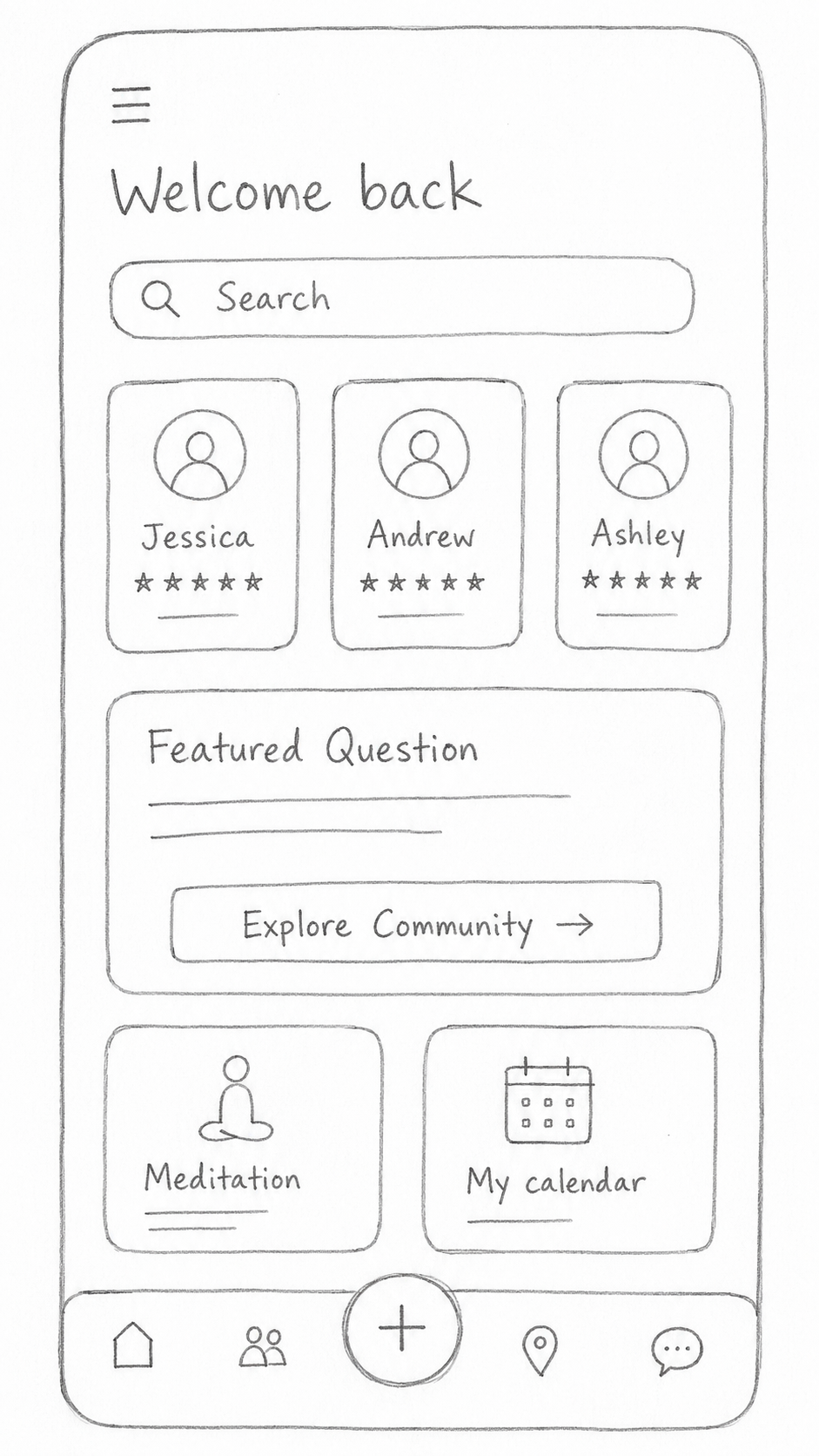
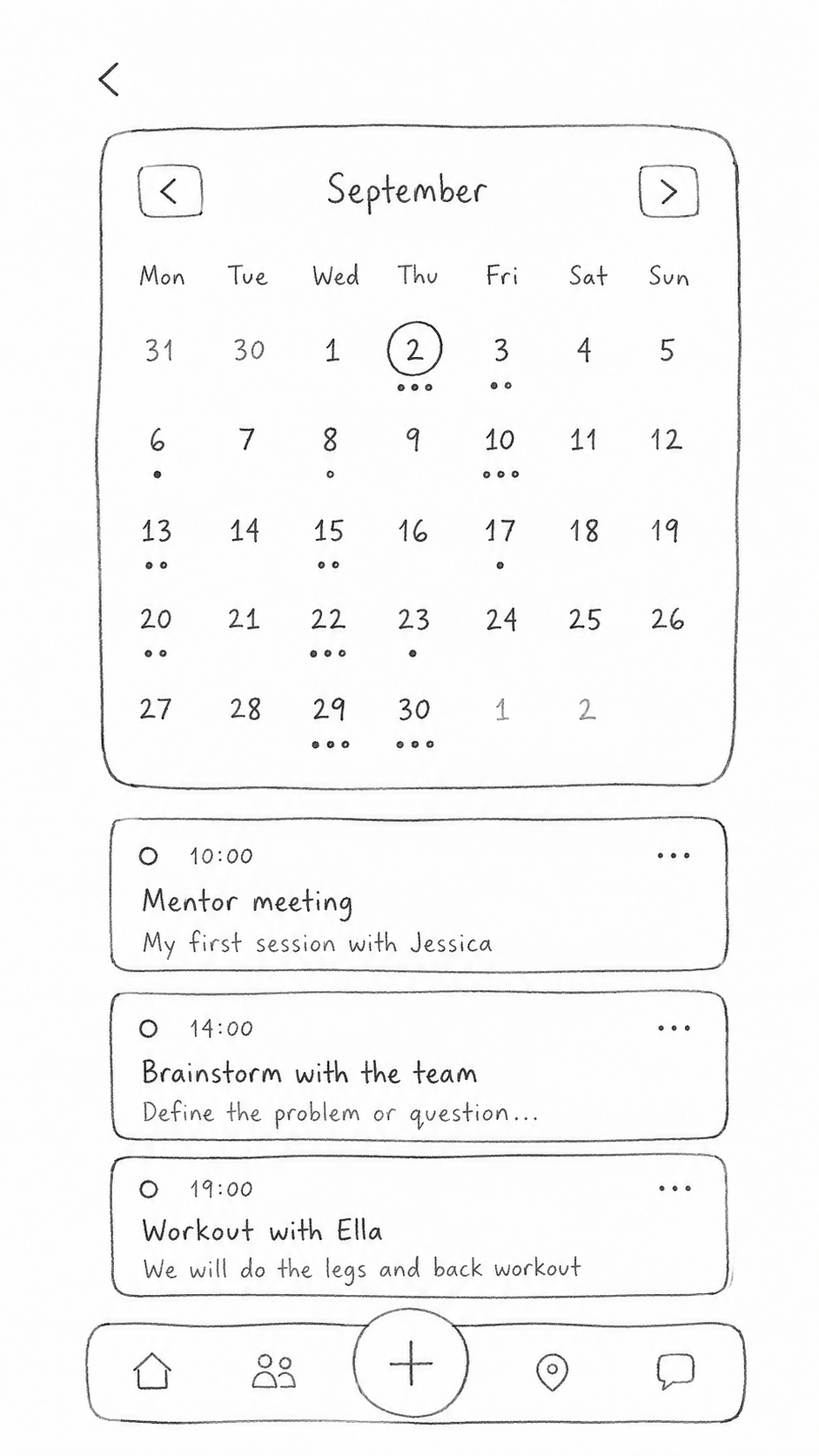
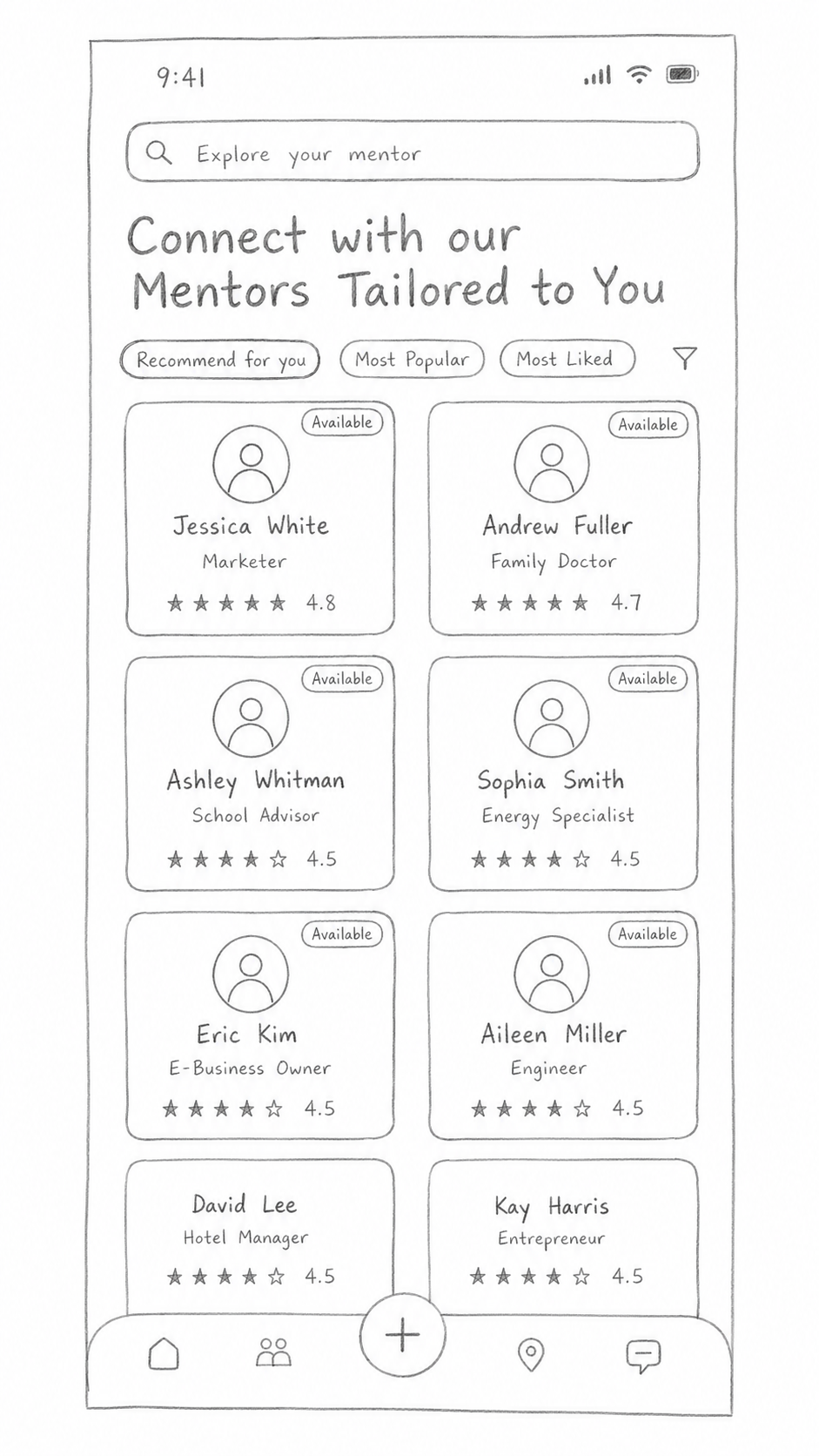
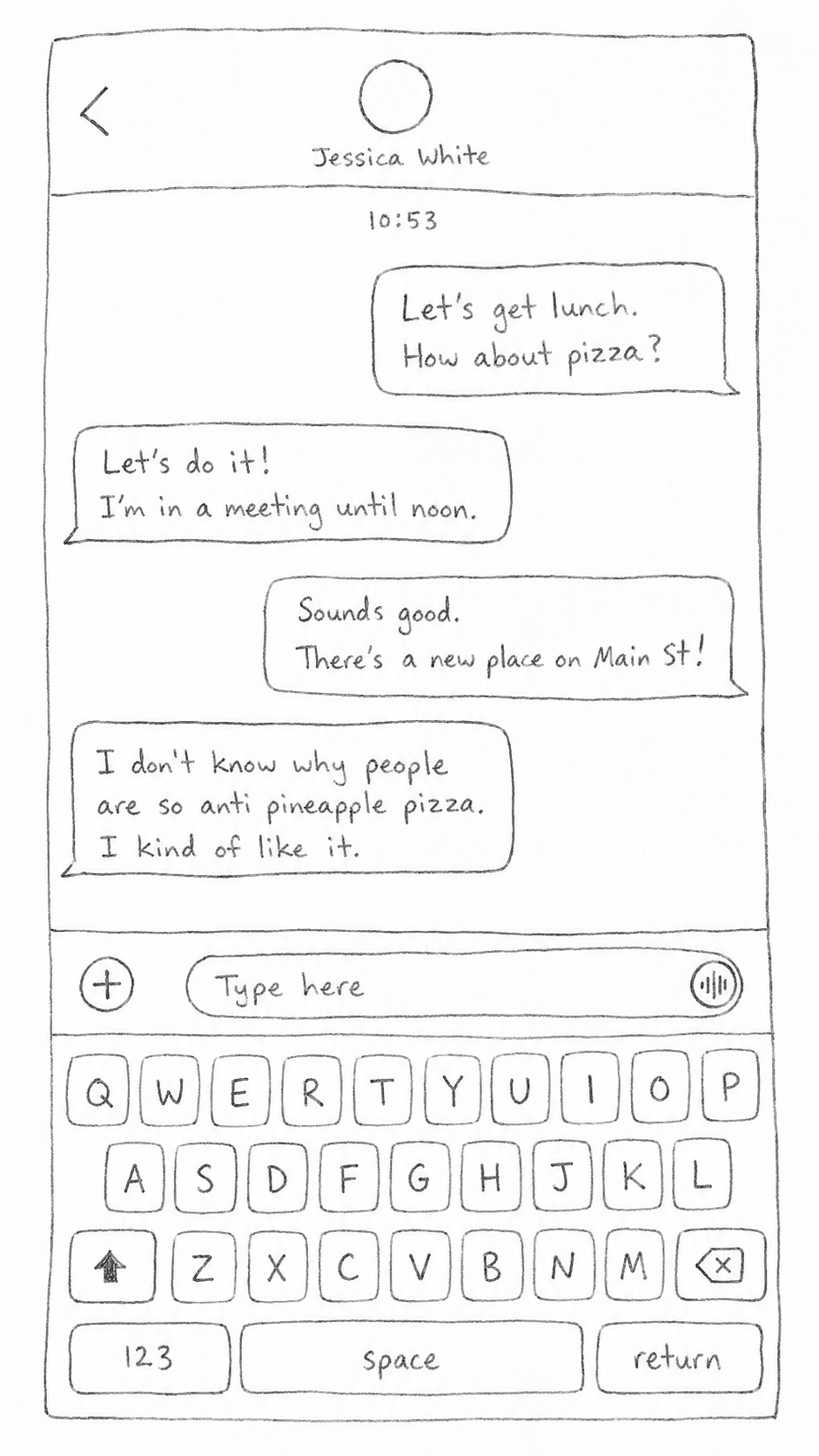
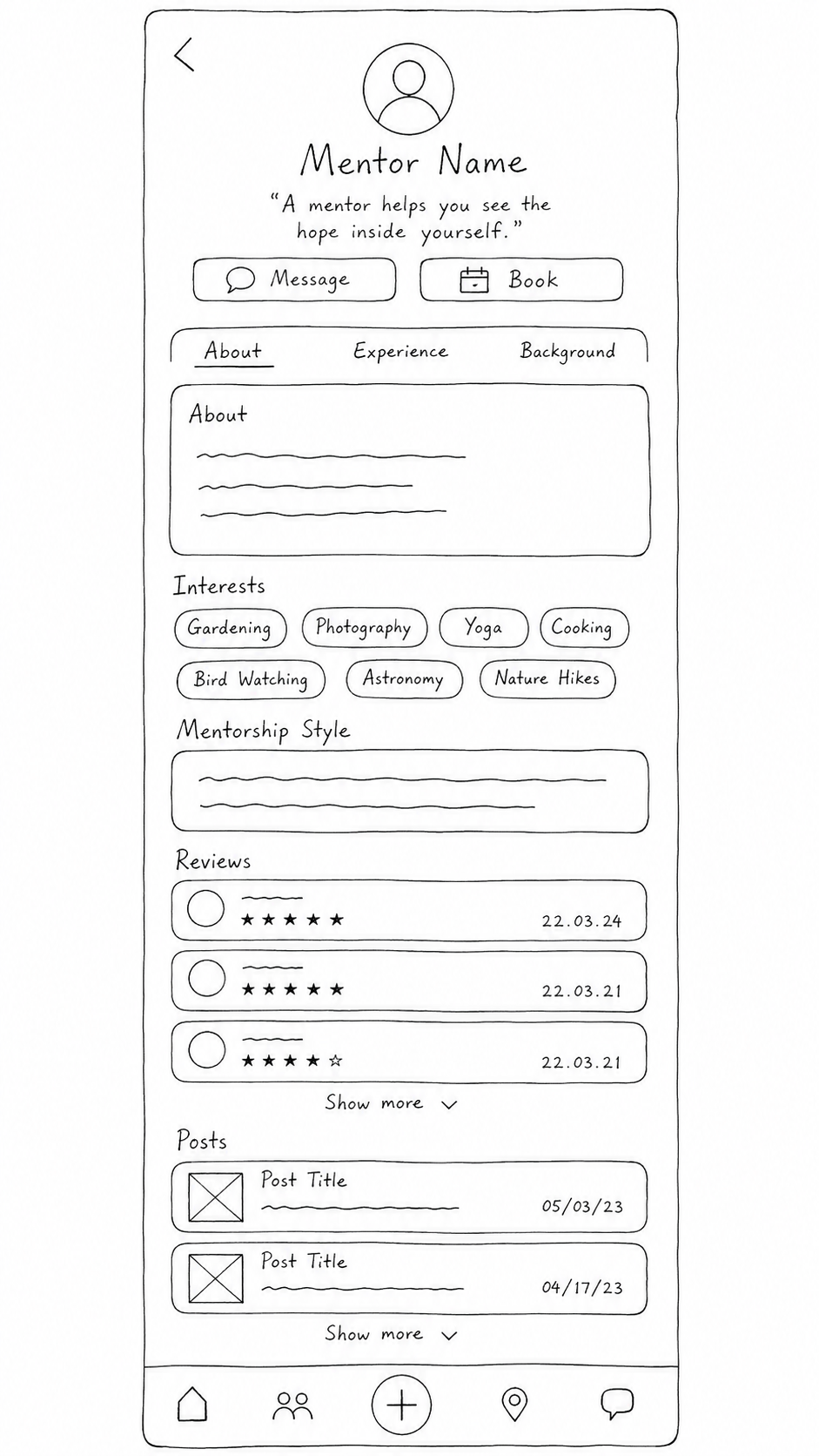
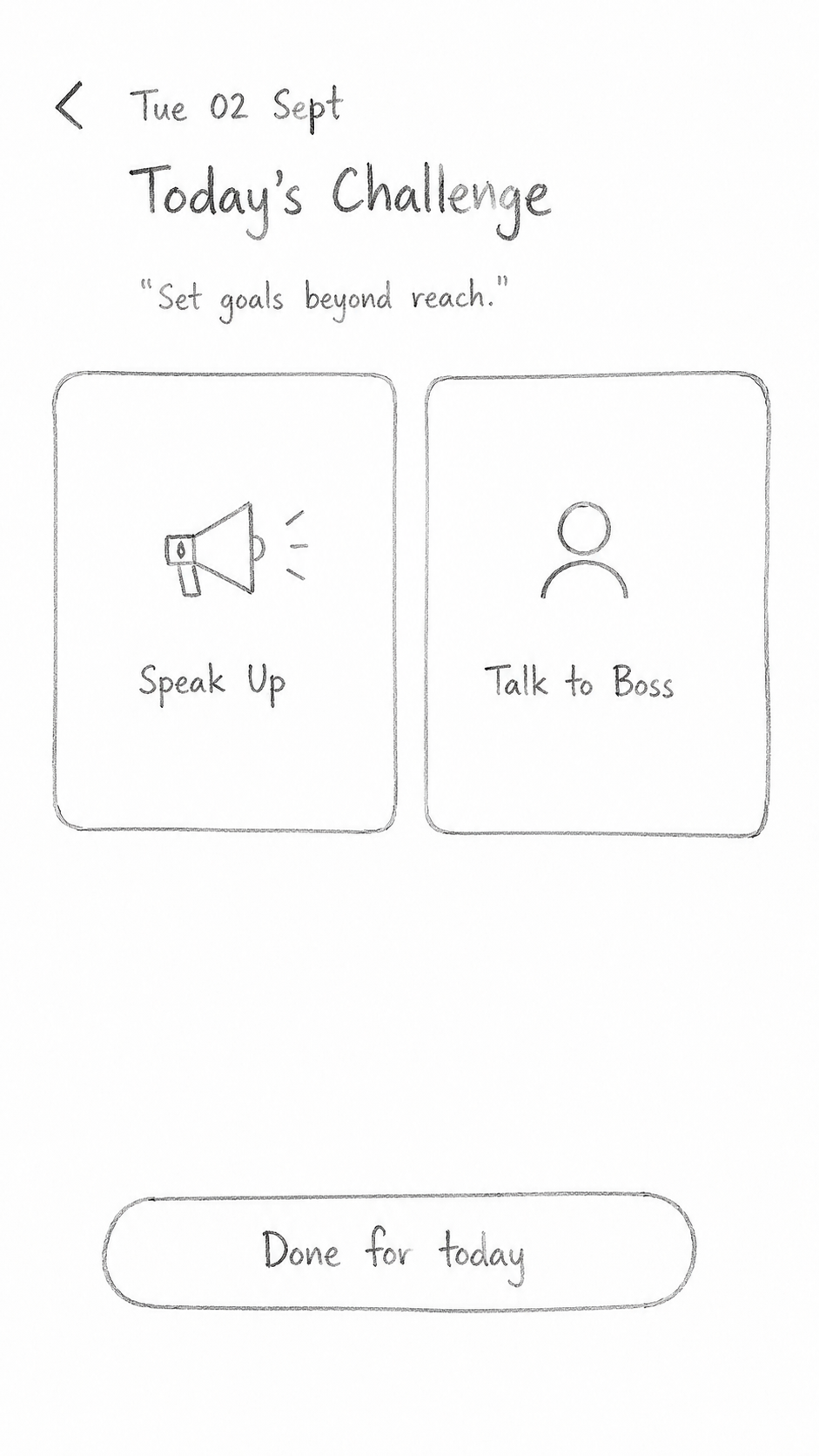


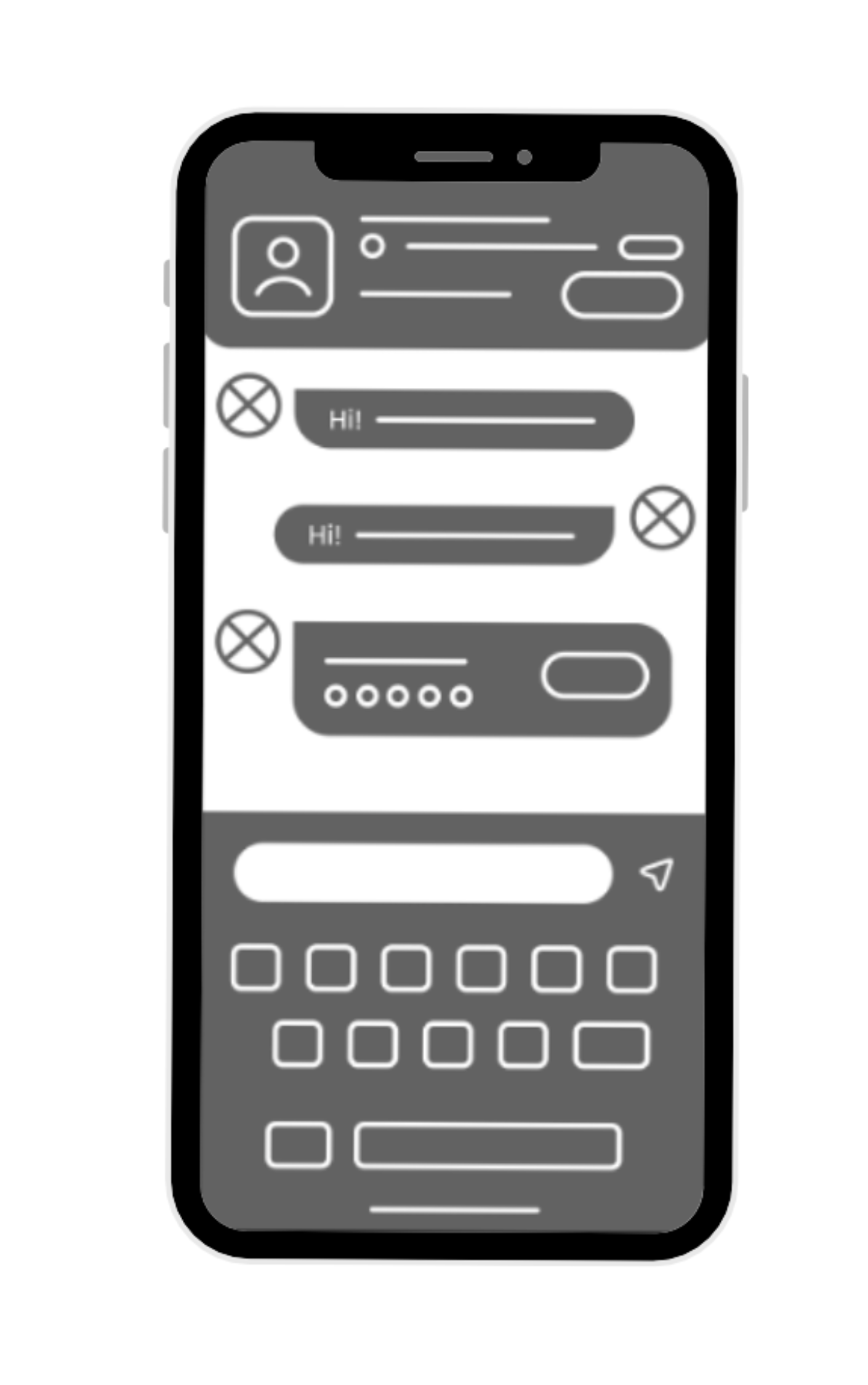
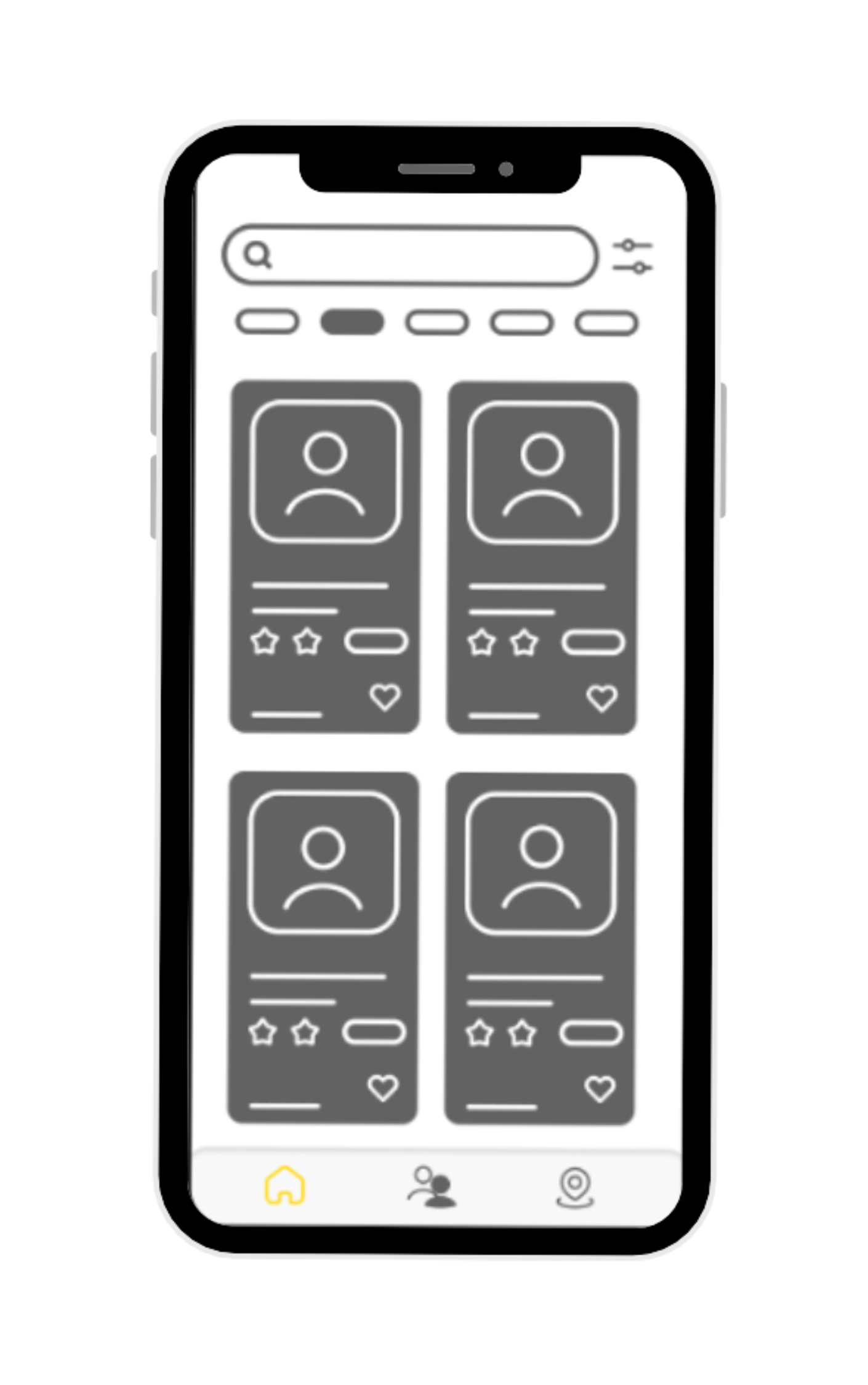
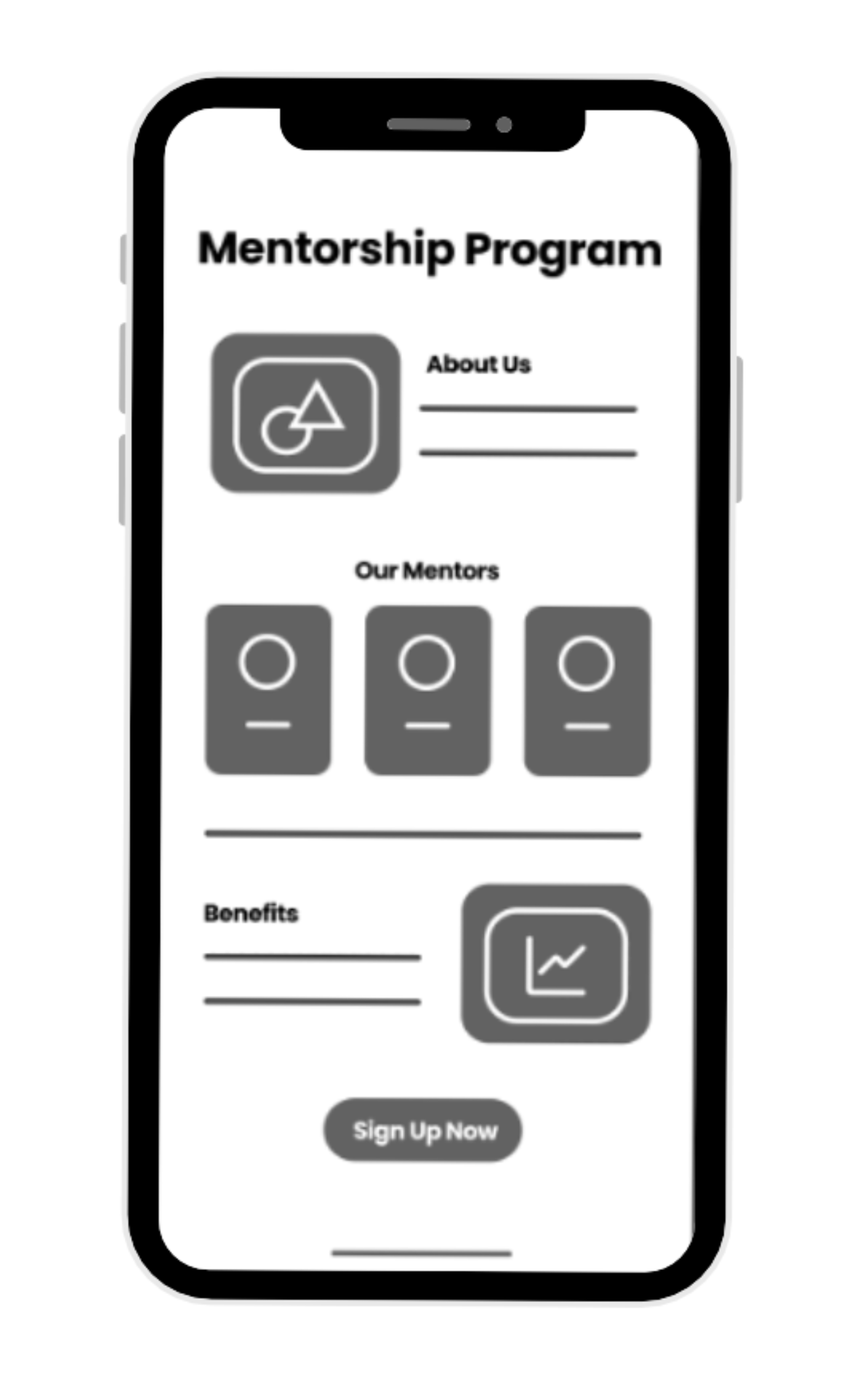
Once we finished the initial sketches and wireframes, we thought our screens looked clean and the flow was ready to go. However, our AB testing caught us completely off guard. We noticed that for users like Emily who already experience workplace anxiety, our standard features actually made them more hesitant to interact.
We quickly realized that common tech patterns we take for granted—like flawless mentor achievements, real-time "read" receipts, and open-ended messaging—were creating a massive wave of social pressure and imposter syndrome.
As the Design Lead, I knew that making the app "functional and pretty" wasn’t going to cut it. To truly support users with high cognitive and emotional stress (a crucial yet often overlooked part of AODA and inclusive design), I guided my team to step back and rethink our approach. We let go of the standard UI formulas and made 4 critical design pivots to tackle these subtle psychological barriers head-on:
After Testing: Designing for What the Wireframes Missed
Matching: From "Status Symbols" to "Shared Vulnerability"
Before: Our initial wireframes followed the standard profile layout, highlighting the mentors’ current achievements, elite job titles, and flawless career paths to build credibility.
The Insight: During testing, we found this backfired. Seeing a wall of perfect achievements actually triggered imposter syndrome for users like Emily. It created a rigid hierarchy, making them feel like, "This person is way too successful to understand my struggles."
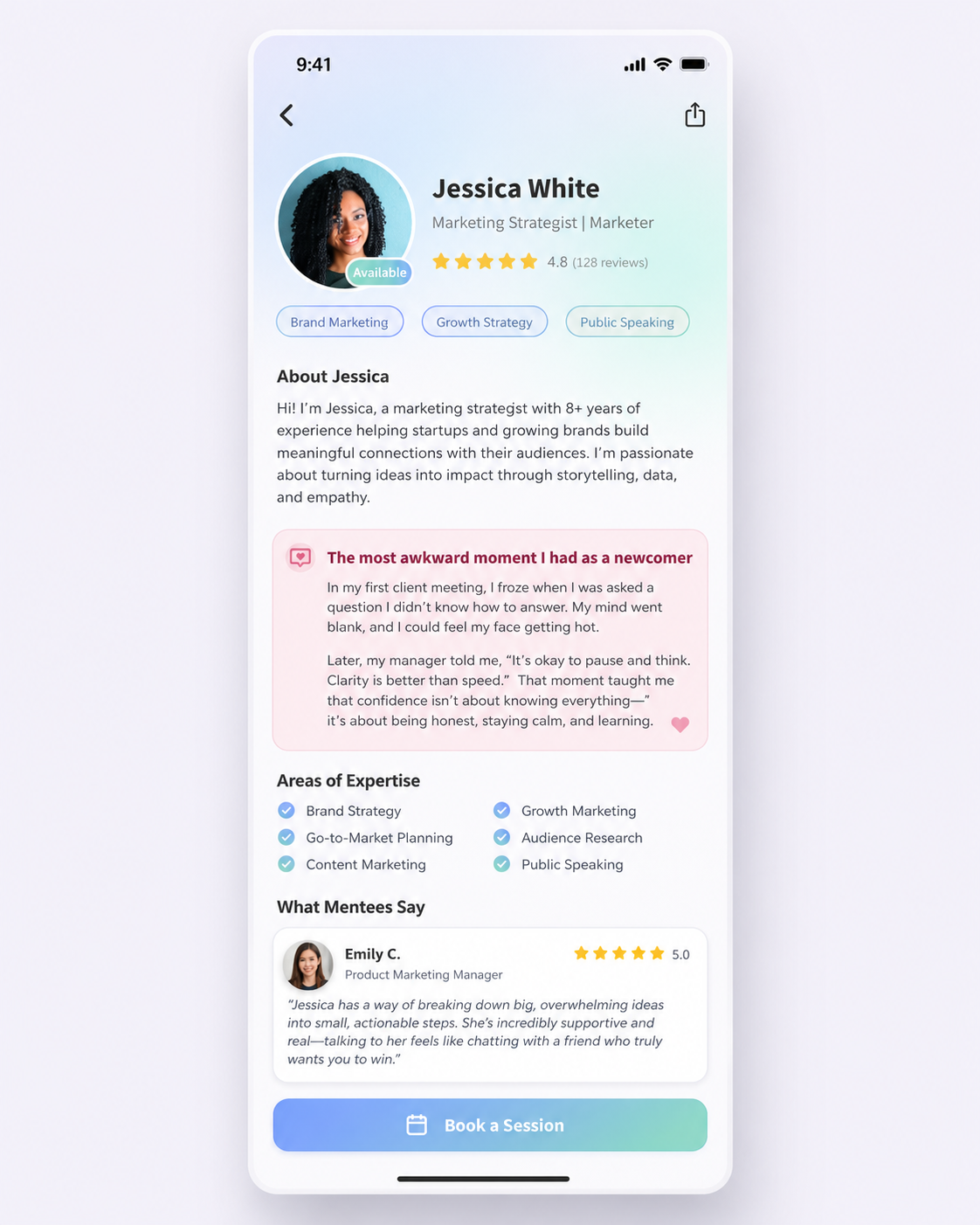
The Pivot: We introduced a mandatory "Past Struggles" section on every mentor profile, featuring prompts like "My most awkward mistake as a newbie" or "How I deal with workplace anxiety." By showing that these experts once stood where Emily is standing now, we broke down the invisible barrier and turned intimidation into immediate empathy.
Messaging: From "Total Freedom" to "Safe Boundaries"
Before: We initially chose a standard, open-ended live chat feature, thinking that giving users complete freedom to message mentors whenever they wanted was the best approach.
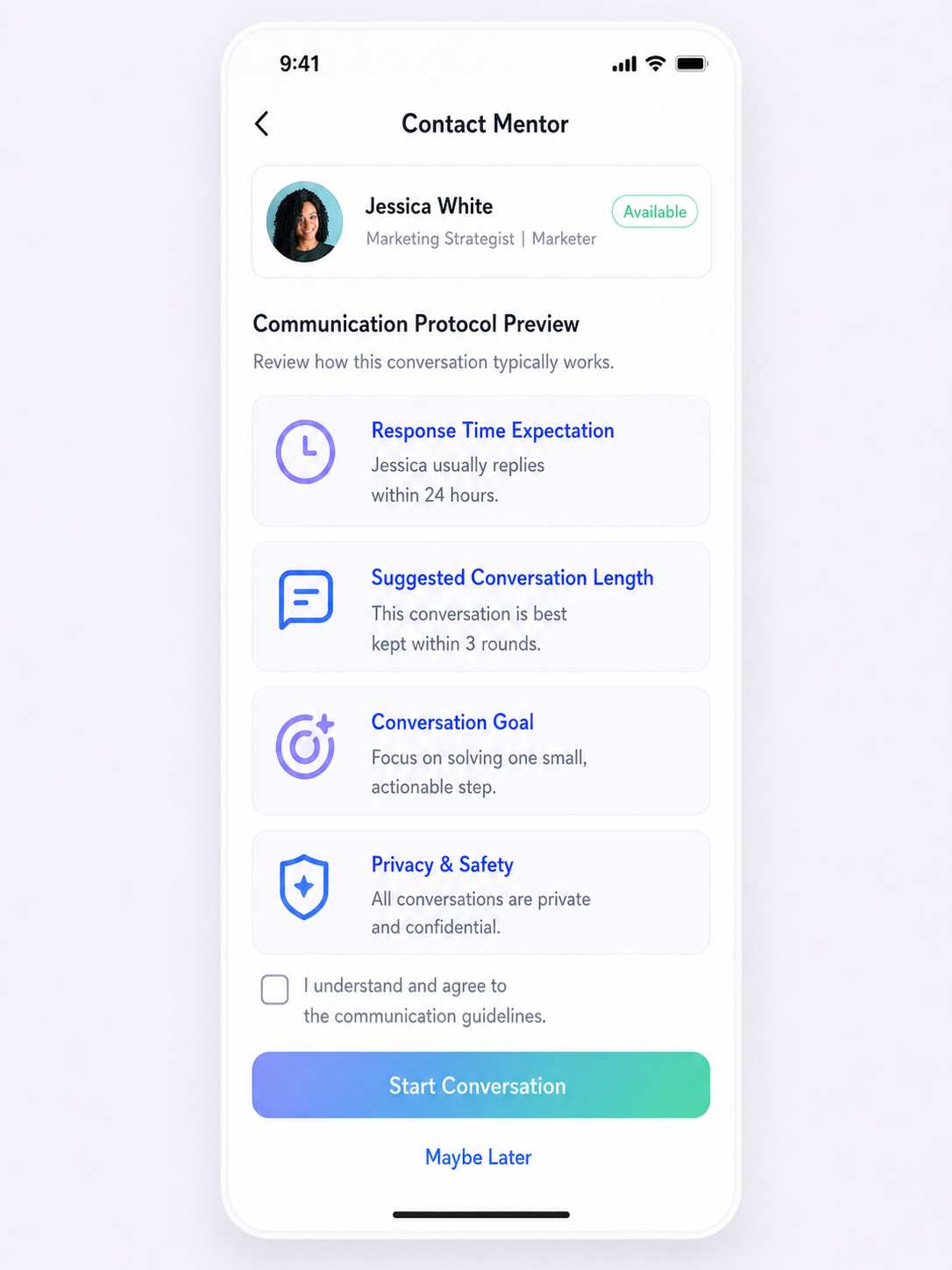
The Insight: Testing proved that for anxious users, too much freedom is actually terrifying. Users were stuck overthinking: "Is it okay to text now?" "Am I bothering them?" "How do I politely end this conversation?" whenever they wanted was the best approach.
The Pivot: We replaced the blank slate with a "Communication Protocol Preview." Now, before hitting send, users see a clear, cozy agreement card: "Mentors usually reply within 24 hours" and "This session is set for 3 quick exchanges to solve one specific micro-action." Locking in these boundaries took away the guesswork and gave users a clear sense of control and safety.
Feedback: From "Instant Updates" to "Anxiety Buffers"
Before: We designed standard "Read" and "Delivered" receipts, assuming that instant transparency would make the communication feel efficient.
The Insight: We noticed that the infamous "Read" status was a massive anxiety trigger. If a mentor opened a message but didn’t reply right away, users immediately spiraled into negative self-doubt, thinking: "I must have said something stupid."
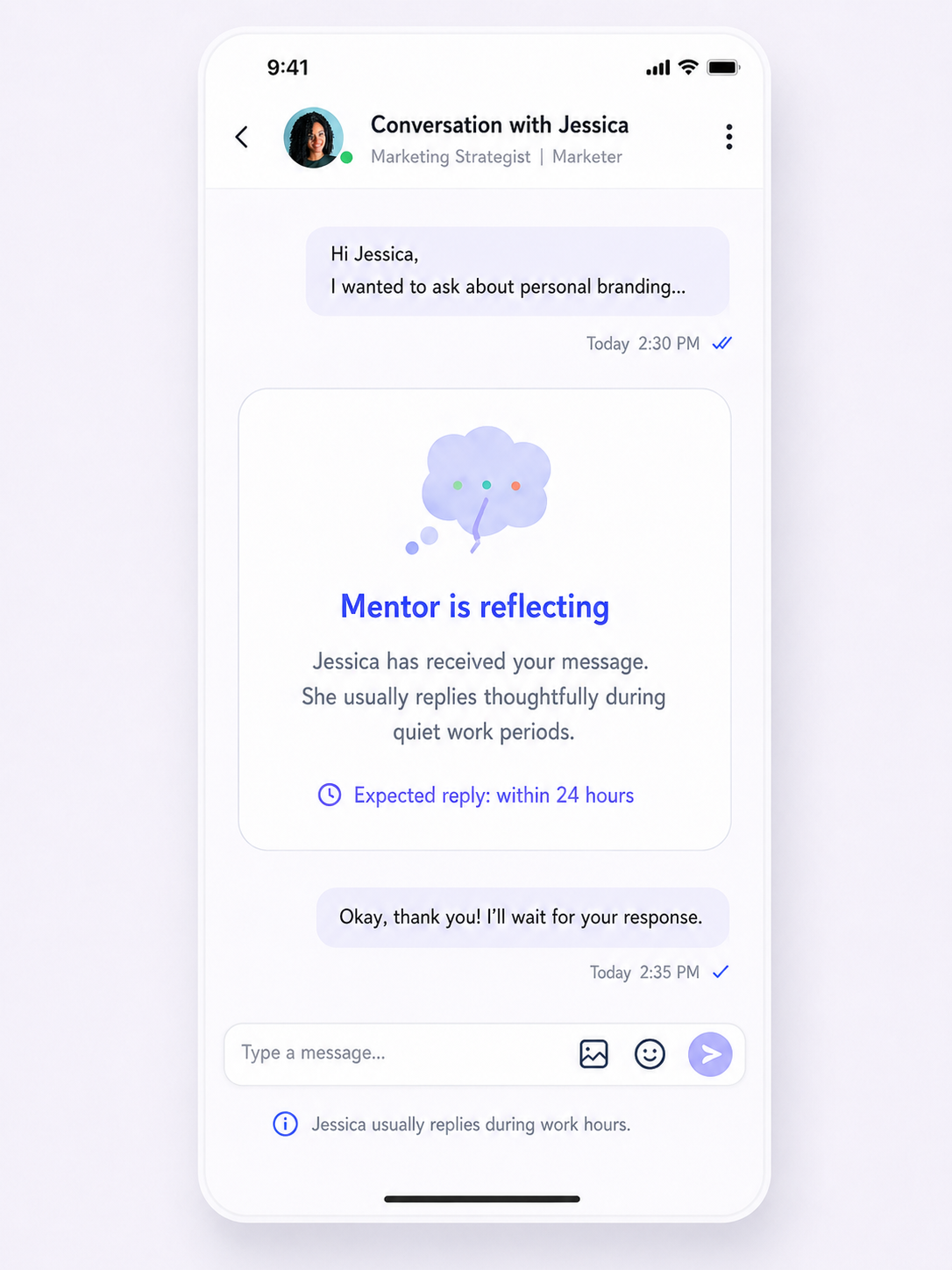
The Pivot: We completely removed traditional read receipts and replaced them with an "Emotional Buffer" status. If a mentor views a message but is too busy to reply, the system displays a thoughtful note: "Your mentor has received this and usually does deep replies during her quiet hours." We chose to prioritize the user's peace of mind over high-speed tracking.
Progress: From "To-Do Checklists" to "Low-Energy Wins"
Before: Our wireframes featured a traditional task checklist to track mentorship goals, pushing users to fill out long forms, schedule meetings, and tick off milestones.
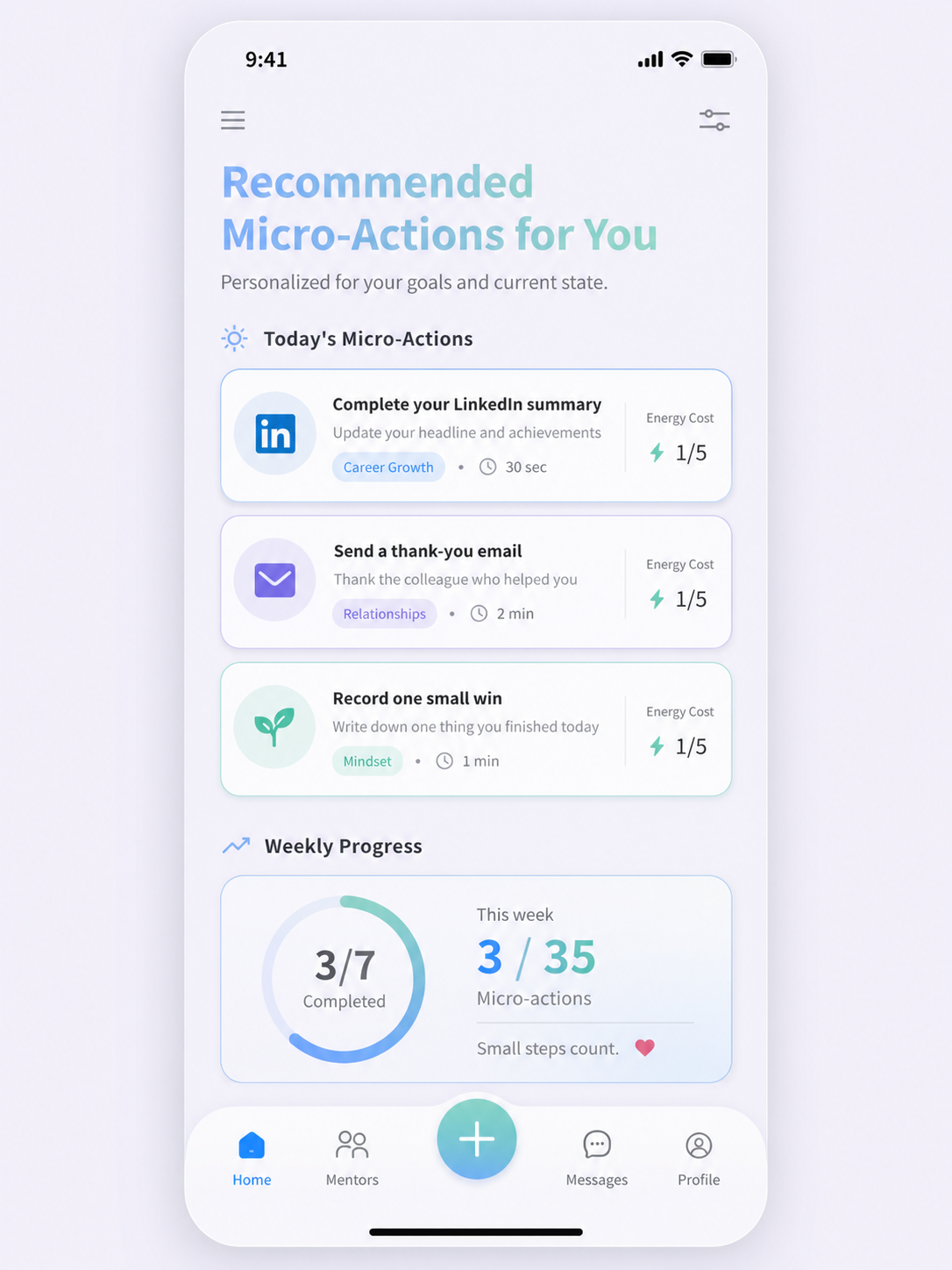
The Insight: Users told us they felt overwhelmed just looking at the screen. People dealing with workplace burnout don't need another heavy task manager adding to their mental load.
The Pivot: To meet AODA cognitive accessibility goals, we chunked big professional goals into "Micro-Action Cards" and introduced an "Energy Cost" tag (e.g., "Mental Energy: 1/5, takes only 30 seconds"). By keeping the tasks ridiculously low-effort, we reduced the cognitive load and helped users rebuild their confidence through tiny, friction-free wins.
Moving Forward: How I Would Lead This Project into Production
While this remains a conceptual student project for now, if we were to take this platform to market and prepare it for actual development, as the Design Lead, I would guide my team to elevate our design maturity through these four industry-standard lenses:
1. I would turn design assumptions into strict engineering constraints
The Execution: Instead of letting the team stop at "pretty mockups," I would align our assets with real-world development standards. I would lead the team to strictly follow the Atomic Design framework, breaking every UI element down into reusable Atoms and Molecules.
The Approach: I would ensure our layout and spacing strictly adhere to an 8pt grid system. This guarantees our design tokens and components can seamlessly map to mainstream front-end CSS frameworks like Tailwind or Bootstrap, making the handoff effortless for the engineering team.
2. I would design comprehensively for "Edge Cases" and system states
The Execution: In a real production environment, a perfect "Happy Path" is never enough. I would push the team to map out what happens when things go wrong—such as network drops, loading delays, or empty screens.
The Approach: Knowing our target users are highly sensitive to workplace anxiety, cold error messages would only cause more stress. I would design empathetic, supportive Empty States and Loading States with comforting placeholder copy. By replacing clinical technical talk with reassuring UI feedback, we would actively minimize user friction during moments of system delay or onboarding drops.
3. I would implement a strict prioritization strategy for an MVP release
The Execution: Our initial brainstorming yielded dozens of exciting ideas (like video live-streaming and public community forums). In a live launch scenario, I would act as the "gatekeeper of scope" to ensure the team doesn't suffer from feature creep.
The Approach: I would lead a structured MVP (Minimum Viable Product) grooming session. I would intentionally shelve the community forum to protect the feeling of professional safety, and defer video streaming due to its high technical complexity and the unnecessary pressure it puts on users. I would focus 80% of our team’s engineering resources entirely on perfecting the 1-on-1 matching and communication logic.